

Getting Started With Solar
How rooftop solar works
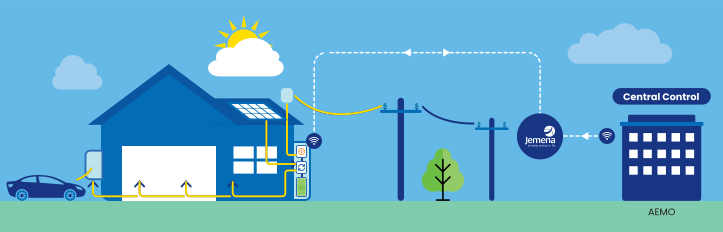
Your solar installation journey
Your solar journey involves more than just choosing a system. From selecting a qualified installer to connecting your system to the electricity network, there are several important steps along the way. Your installer will manage the application and approval process, install and configure your system, and work with your electricity retailer and Jemena to ensure your system meets all technical requirements and can operate safely.
As part of the connection process, solar systems must comply with the Victorian Emergency Backstop Mechanism (VEBM), which helps maintain electricity network stability during certain operating conditions.
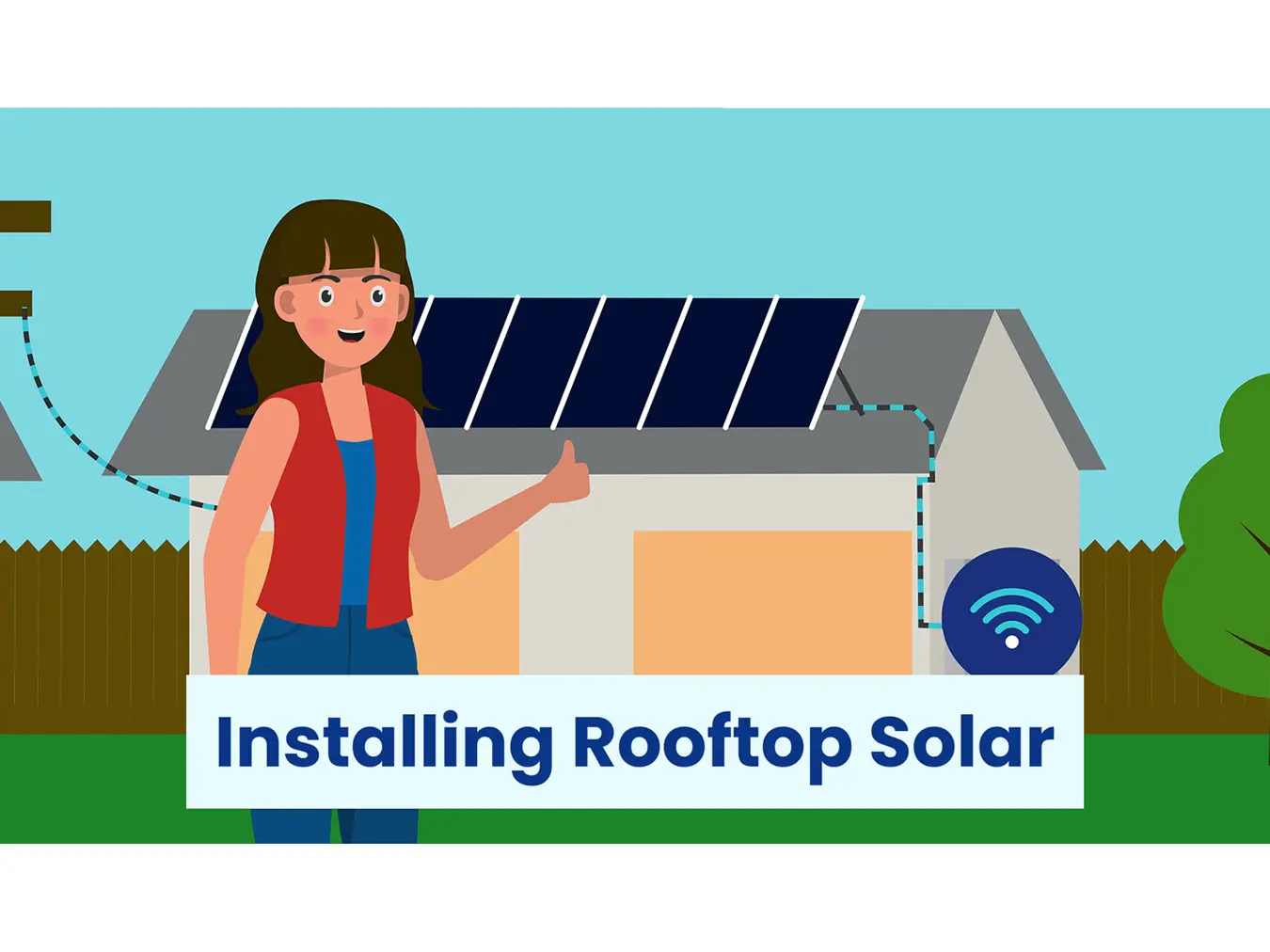

Follow these steps to navigate the process with confidence, and prepare for a smooth and successful solar installation experience.
Choose your installer
The first step is to log into our My Portal platform to see how much electricity you use and when you use it. If you need your solar system to work independently during power outages or if you use a lot of electricity at night, you might consider installing a battery too.
Share your usage information with your solar installer to help them recommend the right system and size for your needs. Remember, larger systems aren't always better, it may be better to use more of the electricity you generate than send it back to the grid (export).
Always use an accredited installer. You can check if your installer is accredited by visiting the Solar Accreditation Australia (SAA) website.
Applying to connect solar to the network
Before signing a contract with your chosen solar installer, make sure the quoted solar system is compliant by checking the CEC list of approved CSIP- AUS inverters and Jemena's approved list of inverters. In order to connect to the Jemena network, the system needs to be on the Jemena's approved list of inverters. Once that's all set, ask your installer to raise an Approve My Generation or Battery Storage application in My Portal on your behalf.
The average residential system is typically less than 10KVA per phase (30KVA for 3 phase) and will be treated as a Basic Connection, with pre-approval under the Model Standing Offer (MSO), which sets out the standard terms for connecting your system to the Jemena Electricity Network.
Systems exceeding these limits (larger systems than 10KVA per phase/30KVA for 3 phase) must follow a Negotiated Connection process and sign a generator agreement. Our connections team will contact your installer about this once they receive an application.
Installing the solar system
Your accredited installer will install the solar system, and you will need to provide them with your internet details so that the inverter can be connected. It is recommended that To maintain a stable connection, we recommend using an ethernet cable.
Once installation is complete, your installer will engage a Licenced Electrical Inspector (LEI) to inspect and provide a Certificate of Electrical Safety (CES). Then, your installer will submit a Commission My Inverter application in My Portal to request Jemena to perform all necessary commissioning tests.
During this time, the inverter should remain on and connected to the internet. Jemena will communicate the commissioning test outcome via My Portal. If anything fails, the installer will receive an email to resubmit the request.
Ask your installer to give you instructions on how to connect your inverter to the internet in case you need it in the future, such as if you change your Wi-Fi password.
System connection with solar metering
Once you receive confirmation that your application has been approved by Jemena, you (or your installer) will need to notify your electricity retailer prior to turning on your system. Your retailer will ask Jemena to change your tariff to the solar feed in tariff.
If this is the first time you have installed rooftop solar, Jemena may need to reconfigure your meter. The process will take just a few days, unless a site visit is needed, which could take up to 20 days. Meter configuration is not required for customers who are upgrading or replacing their solar systems.
Successful solar connection and ongoing compliance
It's important to ensure your inverter is always connected to the internet to get the most benefit of your solar system. Ask your solar installer for instructions on how to do this.
Check your electricity bill month-to-month to make sure you're receiving solar credits as expected. Speak to your electricity retailer if you have any questions.
From time to time, we'll need to conduct some tests to check that your inverter is still connected to the internet and remains compliant. During these tests, your solar generation will be interrupted for between 20–30 mins, and we will let you know in advance when we have testing planned. These test will not affect the supply of electricity to your home.