
Understanding solar system sizes
Understanding rooftop solar system sizes
Rooftop solar system “size” describes how much electricity a system can generate under ideal conditions, not how much electricity it will produce at all times. System sizes are referred to in kilowatts (kW) and are based on the combined capacity of all solar panels installed.
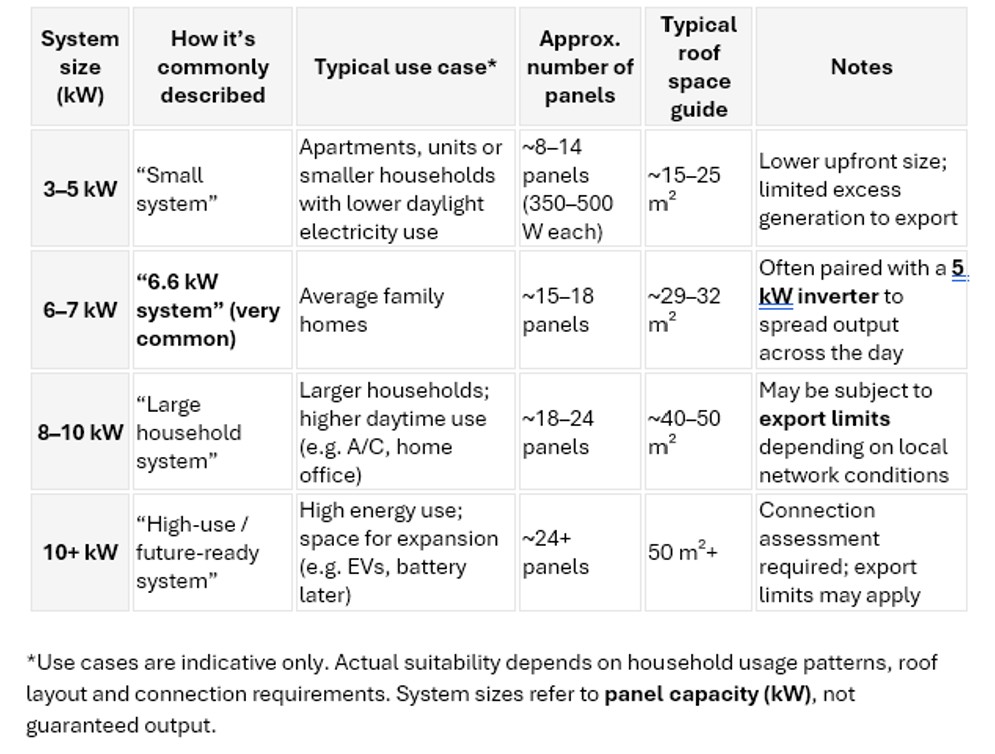
Common rooftop solar system sizes
Across Australia, average household system sizes have increased over time as panel efficiency has improved and household electricity use has changed.
Small systems (around 3–5 kW)
- Often suited to apartments, units or smaller households
- Usually installed where roof space is limited or electricity use is lower
- May reduce daytime electricity use from the grid but typically generate less excess electricity
Medium systems (around 6–7 kW)
- 6.6 kW is one of the most widely installed system sizes
- Commonly used by average family homes
- Often described as a “6.6 kW system with a 5 kW inverter” (see inverter sizing below)
Larger systems (around 8–10+ kW)
- More common in larger households or homes with higher electricity use (for example, air‑conditioning, pools or electric vehicles)
- Require more suitable roof space and network approval
- May be subject to limits on how much electricity can be exported to the network, depending on local conditions
Common terms you might see
Kilowatt (kW)
- Measures the size of the solar system (its maximum panel capacity)
- 1 kW = 1,000 watts
Kilowatt‑hour (kWh)
- Measures electricity used or generated over time
- Your electricity bill usually shows usage in kWh
Solar panels (watts or W)
- Each solar panel has a rated output, commonly between 350 W and 500 W
- The number of panels × panel wattage = system size
- Example: 15 panels × 440 W ≈ 6.6 kW
Inverter size
- The inverter converts solar electricity into a form your home can use
- In many homes, the inverter is smaller than the panel capacity
- A common example is a 6.6 kW system paired with a 5 kW inverter, which is allowed under Australian standards and helps spread generation across the day
Roof space
- As a general guide, solar systems require around 4–5 square metres of roof space per kilowatt, depending on panel type and roof layout
- Actual requirements vary based on roof orientation, shading and design
Determine what system size is right for you
There is no one‑size‑fits‑all system. A suitable solar system size depends on:
- How much electricity a household uses and when it is used
- Available sunny roof space
- Local sunlight conditions
- Network connection requirements
- Budget and future plans (such as adding a battery)
Solar installers use specialised software and site assessments to recommend a system size based on these factors.
Important to know
- Jemena does not recommend system sizes, sell solar systems or provide rebates.
- All solar systems must meet technical connection requirements to ensure the electricity network remains safe and reliable.